


What Litter is Healthiest for Cats? Expert Guide to Safe, Non-Toxic Options 2026

When it comes to your cat’s health and wellbeing, choosing the healthiest cat litter is one of the most important decisions you’ll make as a pet owner. With cats spending significant time in their litter boxes daily, the litter they use can directly impact their respiratory health, paw safety, digestive system, and overall quality of life. But what litter is healthiest for cats?
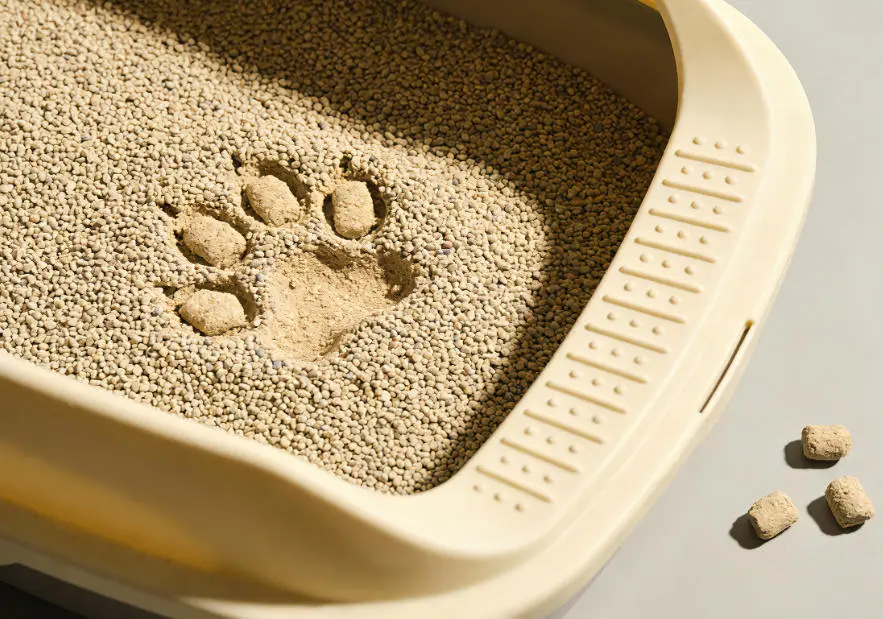
The healthiest cat litter prioritizes safety, minimizes health risks, and supports your cat’s natural behaviors without exposing them to harmful chemicals, excessive dust, or toxic ingredients. In this comprehensive guide, we’ll explore the healthiest cat litter options available, examine the health risks associated with different litter types, and provide expert recommendations to help you make the safest choice for your feline companion.
Table of Contents
- Understanding Cat Litter and Health
- Health Risks of Unhealthy Cat Litter
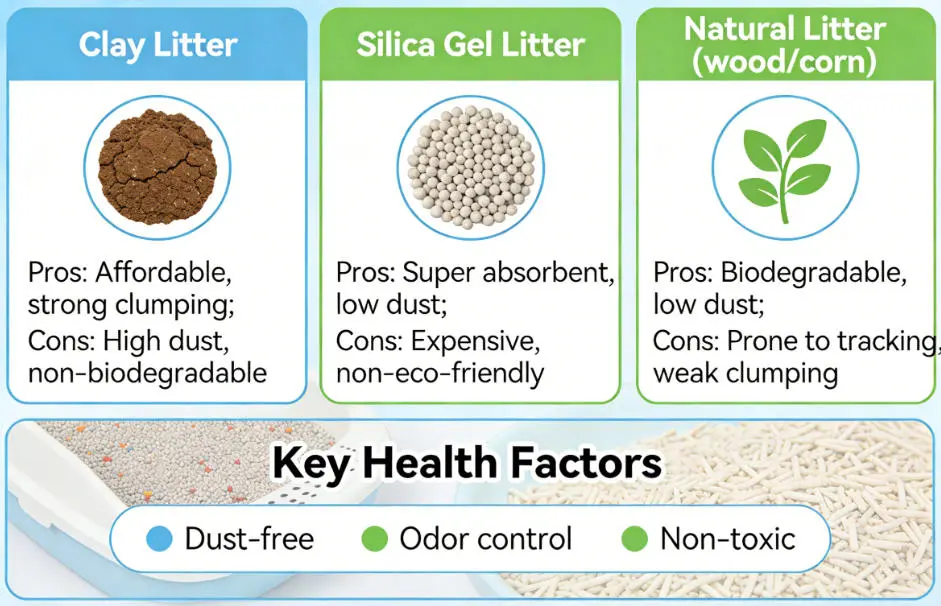
- Healthiest Cat Litter Materials
- Natural and Organic Cat Litter Options
- Dust-Free Litter for Respiratory Health
- Non-Toxic and Chemical-Free Options
- Healthiest Litter for Kittens
- Best Healthy Litter for Senior Cats
- Litter for Cats with Health Conditions
- Ingredients to Avoid
- Veterinarian Recommendations
- Testing and Safety Standards
- Transitioning to Healthier Litter
- Healthy Litter Box Maintenance
- Frequently Asked Questions
- Final Recommendations
Understanding Cat Litter and Health
To determine what litter is healthiest for cats, we must first understand how cat litter affects feline health. Cats interact with their litter in multiple ways that can impact their wellbeing.
How Cats Interact with Litter
Cats don’t just walk on their litter—they engage with it in ways that create multiple exposure points:
- Inhalation: Cats breathe in dust particles when digging, covering waste, and simply being near the litter box
- Paw contact: Direct skin contact with litter materials can cause irritation or absorption of chemicals
- Ingestion: Cats groom their paws after using the litter box, potentially ingesting litter particles
- Prolonged exposure: Indoor cats may spend 15-30 minutes daily in or near their litter box
Why Litter Health Matters
The healthiest cat litter matters because unhealthy options can lead to:
- Respiratory problems including asthma and chronic bronchitis
- Skin irritation and allergic reactions
- Digestive issues if litter is ingested
- Paw pad injuries or chemical burns
- Long-term exposure to carcinogens
- Behavioral issues like litter box avoidance
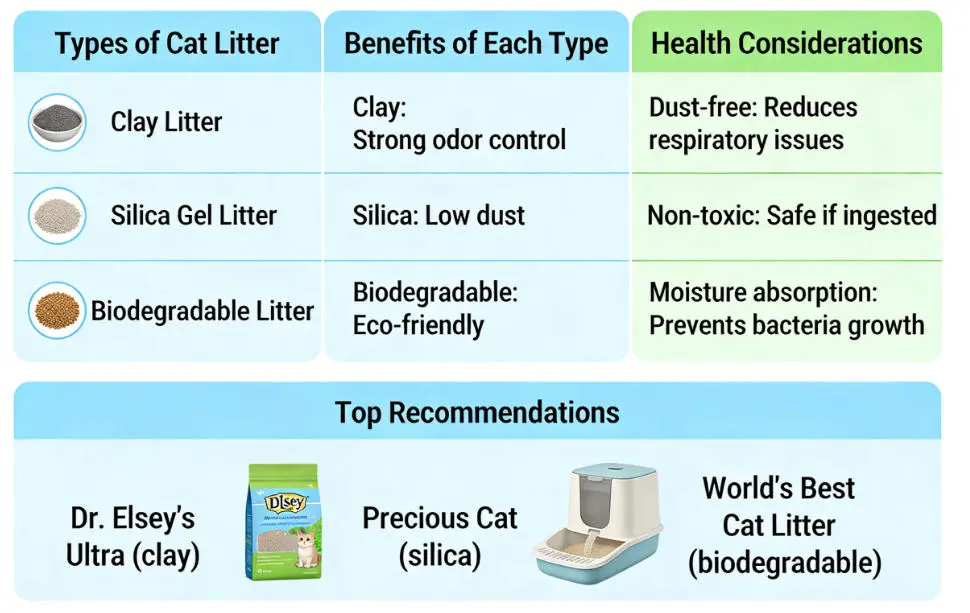
The Connection Between Litter and Cat Health
Research has shown clear connections between litter quality and cat health:
- Respiratory health: Studies indicate that dusty litter can exacerbate feline asthma and respiratory conditions
- Urinary health: Cats may avoid dirty or uncomfortable litter boxes, leading to urinary tract issues
- Digestive health: Ingestion of certain litter types can cause intestinal blockages or toxicity
- Skin health: Harsh chemicals or rough textures can damage sensitive paw pads
What Makes Cat Litter “Healthy”?
The healthiest cat litter for cats shares these key characteristics:
- Low or zero dust production
- Non-toxic, natural ingredients
- Free from harmful chemicals and fragrances
- Safe if accidentally ingested
- Gentle on paws and skin
- Effective odor control without artificial additives
- Biodegradable and environmentally safe
Understanding these fundamentals helps us identify what litter is healthiest for cats and why certain options are superior to others.
Health Risks of Unhealthy Cat Litter
Before identifying the healthiest cat litter, it’s crucial to understand the health risks posed by unhealthy options. This knowledge helps you avoid dangerous products and make informed decisions.
Respiratory Health Risks
Respiratory issues are among the most common health problems associated with unhealthy cat litter:
Silica Dust Exposure
Many clay-based litters contain crystalline silica dust, which poses serious risks:
- Can cause chronic respiratory inflammation
- May contribute to feline asthma development
- Linked to lung damage with prolonged exposure
- Particularly dangerous for cats with pre-existing respiratory conditions
- Also harmful to humans handling the litter
General Dust Problems
Even non-silica dust can cause health issues:
- Triggers coughing and sneezing
- Irritates nasal passages and throat
- Exacerbates allergies in sensitive cats
- Can lead to chronic bronchitis
- Reduces air quality in your home
Chemical Exposure Risks
Many conventional litters contain chemicals that aren’t healthy for cats:
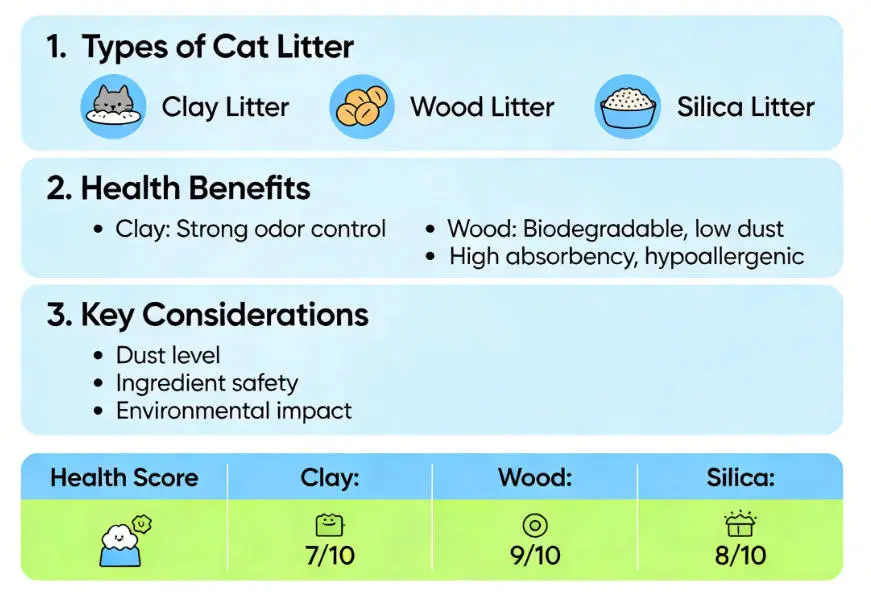
Artificial Fragrances
- Can cause allergic reactions
- May irritate respiratory system
- Often contain phthalates (hormone disruptors)
- Can trigger headaches and nausea
- May cause litter box avoidance
Chemical Additives
- Sodium bentonite (clumping agent) can cause digestive blockages if ingested
- Antimicrobial chemicals may disrupt natural bacteria
- Dyes and colorants serve no purpose and add chemical exposure
- Deodorizing chemicals can be toxic
Ingestion Hazards
Cats groom their paws after using the litter box, potentially ingesting litter particles:
Clumping Litter Risks
- Sodium bentonite expands when wet
- Can cause intestinal blockages
- Particularly dangerous for kittens
- May lead to dehydration
- Can require surgical intervention
Toxic Ingredients
- Some litters contain ingredients toxic if ingested
- Chemical fragrances can cause poisoning
- Certain clumping agents are harmful when swallowed
- Dyes and additives may be toxic
Skin and Paw Health Risks
Direct contact with unhealthy litter can damage your cat’s paws:
- Chemical burns: Harsh chemicals can burn sensitive paw pads
- Allergic reactions: Contact dermatitis from litter ingredients
- Dryness and cracking: Some litters strip natural oils from paws
- Bacterial infections: Dirty litter can harbor harmful bacteria
- Fungal infections: Moist litter creates breeding ground for fungi
Long-Term Health Concerns
Chronic exposure to unhealthy litter may contribute to:
- Development of chronic respiratory diseases
- Increased cancer risk from carcinogenic materials
- Hormonal disruption from chemical exposure
- Weakened immune system
- Chronic inflammation
Understanding these risks makes it clear why choosing the healthiest cat litter is essential for your cat’s long-term wellbeing.
Healthiest Cat Litter Materials
Now that we understand the risks, let’s explore what litter is healthiest for cats by examining the safest materials available.
Paper-Based Litter: Top Choice for Health
Paper-based litter is widely considered one of the healthiest cat litter options:
Health Benefits:
- 99% dust-free, protecting respiratory health
- Non-toxic and safe if ingested
- Soft and gentle on paws
- No harmful chemicals or additives
- Hypoallergenic
- Made from recycled materials
Best For:
- Cats with asthma or respiratory issues
- Post-surgery recovery
- Kittens (safe if ingested)
- Cats with allergies
- Declawed cats (soft texture)
Considerations:
- Less effective odor control than some alternatives
- Requires more frequent changes
- Can track easily
- Higher cost per use
Wood-Based Litter: Natural and Safe
Wood litters, particularly pine and cedar, offer healthy alternatives:
Pine Litter
Health Benefits:
- Natural pine oils provide antimicrobial properties
- Low dust production
- Biodegradable and non-toxic
- Natural odor control without chemicals
- Safe if small amounts are ingested
Health Considerations:
- Strong pine scent may bother some cats
- Phenols in fresh pine can be harmful (use kiln-dried only)
- Pellets may be uncomfortable for some cats
Cedar Litter
Health Benefits:
- Natural insect-repelling properties
- Antimicrobial qualities
- Pleasant natural scent
- Low dust
Health Considerations:
- Some cats are sensitive to cedar oils
- May cause respiratory irritation in sensitive cats
- Use with caution for cats with asthma
Corn-Based Litter: Digestible and Safe
Corn litter is among the healthiest cat litter options for several reasons:
Health Benefits:
- Completely non-toxic
- Safe if ingested (digestible)
- Low dust production
- Natural clumping without chemicals
- Biodegradable
- No artificial additives needed
Best For:
- Cats who tend to eat litter
- Kittens
- Multi-cat households
- Environmentally conscious owners
Health Considerations:
- May attract insects if not stored properly
- Can develop mold in humid conditions
- Some cats may try to eat it (though it’s safe)
Wheat-Based Litter: Natural Enzymes
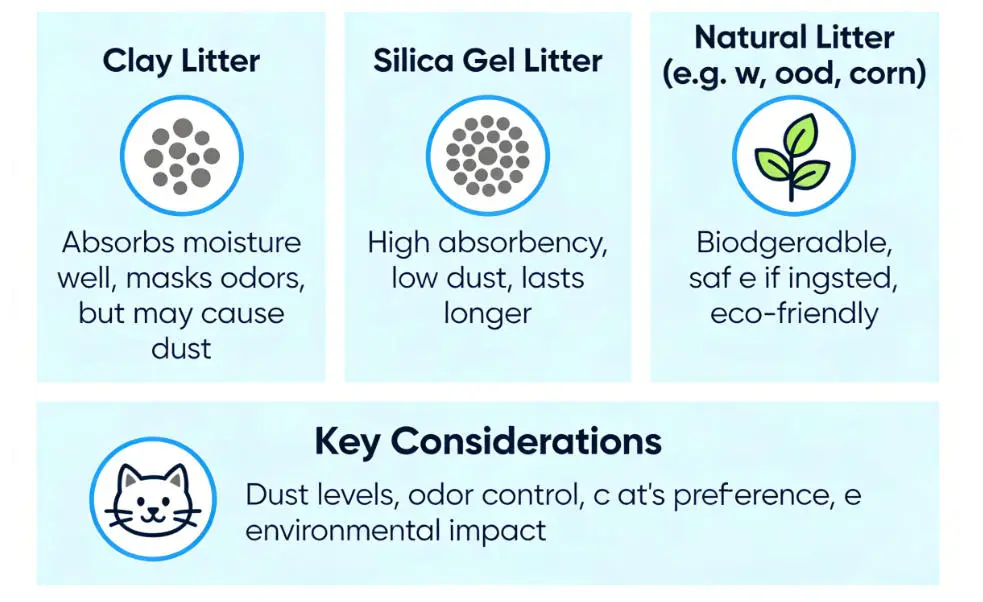
Wheat litter offers unique health benefits:
Health Benefits:
- Natural enzymes neutralize odors
- Non-toxic and digestible
- Low dust
- Chemical-free clumping
- Soft texture gentle on paws
- Biodegradable
Health Considerations:
- Not suitable for cats with wheat allergies
- May attract pests
- Can mold in humid environments
Grass Seed Litter: Lightweight and Safe
Grass seed litter is a newer, healthy option:
Health Benefits:
- Extremely low dust
- Non-toxic and safe
- Lightweight (easier handling reduces injury risk)
- Natural clumping
- Biodegradable
- Soft and comfortable
Best For:
- Cats with respiratory sensitivities
- Senior cats (lightweight for easier maintenance)
- Owners with physical limitations
Walnut Shell Litter: Natural and Effective
Walnut shell litter provides healthy benefits:
Health Benefits:
- Natural and non-toxic
- Low dust production
- No artificial chemicals
- Biodegradable
- Natural odor absorption
Health Considerations:
- Not suitable for cats with nut allergies
- Dark color may make health monitoring difficult
Tofu/Soy Litter: Innovative and Safe
Tofu litter is gaining popularity as a healthy option:
Health Benefits:
- Food-grade ingredients
- Completely safe if ingested
- Dust-free
- Flushable and biodegradable
- No chemicals or additives
- Soft texture
Best For:
- Cats who eat litter
- Kittens
- Health-conscious owners
Each of these materials represents a healthy cat litter choice, with specific benefits for different situations. The healthiest option for your cat depends on their individual needs and sensitivities.
Natural and Organic Cat Litter Options
When considering what litter is healthiest for cats, natural and organic options stand out for their purity and safety.
What Makes Litter “Natural” or “Organic”?
Natural Litter:
- Made from plant-based or mineral materials
- Free from synthetic chemicals
- Biodegradable
- Minimally processed
Organic Litter:
- Made from organically grown materials
- No pesticides or chemical fertilizers used in production
- Certified by organic standards organizations
- Highest purity standards
Benefits of Natural/Organic Litter for Cat Health
Reduced Chemical Exposure
- No synthetic fragrances or dyes
- No pesticide residues
- No artificial clumping agents
- No chemical odor control additives
Better Respiratory Health
- Typically low-dust or dust-free
- No chemical fumes
- Natural materials less likely to cause irritation
Safer Ingestion Profile
- Food-grade or food-safe materials
- Digestible if accidentally consumed
- No toxic ingredients
Top Natural/Organic Litter Brands
Certified Organic Options
Look for litters with certifications such as:
- USDA Organic certification
- Non-GMO Project Verified
- Green America Certified
- Biodegradable Products Institute (BPI) certification
How to Verify Natural Claims
Not all “natural” litters are equally healthy. Verify by:
- Reading complete ingredient lists
- Checking for third-party certifications
- Researching manufacturing processes
- Looking for transparency from manufacturers
- Reading independent reviews and testing results
Natural Litter and Specific Health Conditions
For Allergies:
Choose unscented natural litters like:
- Plain paper litter
- Unscented corn litter
- Grass seed litter
For Respiratory Issues:
Select dust-free natural options:
- Paper pellets
- Tofu litter
- Grass seed litter
For Sensitive Skin:
Opt for soft, gentle materials:
- Paper-based litter
- Soft wood pellets
- Wheat litter
Natural and organic litters represent some of the healthiest cat litter choices available, offering purity and safety that conventional litters can’t match.
Dust-Free Litter for Respiratory Health
Respiratory health is a critical factor when determining what litter is healthiest for cats. Dust-free litter protects both feline and human respiratory systems.
Why Dust-Free Matters
Dust from cat litter poses serious health risks:
For Cats:
- Triggers or worsens feline asthma
- Causes chronic respiratory inflammation
- Irritates eyes, nose, and throat
- Can lead to chronic bronchitis
- Reduces quality of life
For Humans:
- Triggers allergies and asthma
- Causes respiratory irritation
- Long-term exposure may cause lung damage
- Particularly dangerous for children and elderly
Truly Dust-Free Litter Options
1. Paper-Based Litter
Dust Level: 99% dust-free
Why It’s Healthy:
- Pellets or granules don’t create dust
- Soft material doesn’t break down into particles
- Safe for cats with severe respiratory issues
- Recommended by veterinarians for asthmatic cats
2. Tofu/Soy Litter
Dust Level: Virtually dust-free
Why It’s Healthy:
- Compressed pellets don’t produce dust
- Stays intact during use
- Excellent for sensitive respiratory systems
3. Crystal/Silica Gel Litter
Dust Level: 99% dust-free
Why It’s Healthy:
- Large crystals don’t create airborne particles
- No silica dust (different from crystalline silica in clay)
- Excellent for respiratory health
Important Note: Silica gel crystals are different from crystalline silica dust found in clay litters. Silica gel is non-toxic and dust-free.
4. Large Pellet Wood Litter
Dust Level: Very low dust
Why It’s Healthy:
- Large pellets minimize dust creation
- Natural material is less irritating
- Good for mild respiratory sensitivities
How to Test for Dust
When evaluating if a litter is truly dust-free:
- Pour test: Pour litter from height and observe dust cloud
- Shake test: Shake container and check for dust particles
- Scoop test: Scoop litter and watch for dust dispersion
- Air quality: Monitor air quality near litter box
Dust-Free vs. Low-Dust
Understanding the difference is important for cat health:
Dust-Free (99%+):
- Produces virtually no airborne particles
- Safe for cats with severe respiratory issues
- Best choice for asthmatic cats
- Examples: Paper, tofu, crystal litters
Low-Dust (reduced but not eliminated):
- Produces less dust than conventional litters
- May still cause issues for very sensitive cats
- Better than regular litter but not ideal for health issues
- Examples: Some clay litters, certain natural litters
Respiratory Health Benefits of Dust-Free Litter
Immediate Benefits:
- Reduced coughing and sneezing
- Less eye irritation
- Improved breathing
- Better air quality in home
Long-Term Benefits:
- Prevention of chronic respiratory conditions
- Reduced asthma attacks
- Better overall lung health
- Improved quality of life
Special Considerations for Asthmatic Cats
If your cat has asthma, the healthiest cat litter must be completely dust-free:
- First choice: Paper-based pellet litter
- Second choice: Tofu litter
- Third choice: Crystal litter
- Avoid completely: All clay litters, even “low-dust” varieties
Transitioning to Dust-Free Litter
When switching to dust-free litter for health reasons:
- Transition gradually over 7-10 days
- Monitor respiratory symptoms
- Note improvements in breathing
- Watch for reduced coughing/sneezing
- Consult vet if symptoms persist
For cats with respiratory issues, dust-free litter isn’t just the healthiest option—it’s essential for their wellbeing.
Non-Toxic and Chemical-Free Cat Litter Options
When determining what litter is healthiest for cats, eliminating toxic chemicals is paramount. Chemical-free litters protect cats from harmful exposure.
Common Toxic Chemicals in Cat Litter
Artificial Fragrances
Health Risks:
- Often contain phthalates (hormone disruptors)
- Can cause allergic reactions
- May trigger respiratory issues
- Linked to reproductive problems
- Can cause neurological symptoms
Sodium Bentonite
Health Risks:
- Expands when wet (dangerous if ingested)
- Can cause intestinal blockages
- May contain heavy metals
- Particularly dangerous for kittens
Crystalline Silica
Health Risks:
- Classified as carcinogenic
- Causes lung damage
- Linked to respiratory diseases
- Dangerous with long-term exposure
Chemical Deodorizers
Health Risks:
- May contain toxic compounds
- Can cause respiratory irritation
- May trigger allergies
- Some are hormone disruptors
Dyes and Colorants
Health Risks:
- Serve no functional purpose
- May contain toxic compounds
- Can cause allergic reactions
- Potential carcinogens
Healthiest Chemical-Free Litter Options
1. Unscented Paper Litter
Why It’s Healthy:
- No added chemicals
- No fragrances or dyes
- Made from recycled paper
- Non-toxic if ingested
- Safest option for sensitive cats
2. Plain Corn Litter
Why It’s Healthy:
- 100% natural corn
- No chemical additives
- Natural clumping without chemicals
- Biodegradable
- Safe if consumed
3. Unscented Wheat Litter
Why It’s Healthy:
- Pure wheat with natural enzymes
- No artificial additives
- Chemical-free odor control
- Non-toxic
4. Plain Wood Pellets
Why It’s Healthy:
- 100% natural wood
- No chemical binders
- Natural pine oils for odor control
- No additives or fragrances
How to Identify Chemical-Free Litter
Look for these indicators of truly chemical-free litter:
Label Claims to Look For:
- “100% natural”
- “No added fragrances”
- “Chemical-free”
- “No artificial additives”
- “Unscented”
- “Non-toxic”
Certifications:
- USDA Organic
- Non-GMO Project Verified
- Green Seal Certified
- EcoLogo Certified
Ingredient List Red Flags:
Avoid litters listing:
- “Fragrance” or “perfume”
- “Deodorizer”
- “Antimicrobial agents”
- “Color” or “dye”
- Chemical names you don’t recognize
Benefits of Chemical-Free Litter
For Cat Health:
- Reduced allergy symptoms
- Better respiratory health
- Lower toxic exposure
- Safer if ingested
- Less skin irritation
- Reduced hormone disruption risk
For Human Health:
- Better indoor air quality
- Reduced chemical exposure
- Safer for children
- Less respiratory irritation
Natural Odor Control Without Chemicals
The healthiest cat litter controls odors naturally:
Natural Odor Control Methods:
- Absorption: Materials like paper and corn naturally absorb odors
- Natural enzymes: Wheat contains enzymes that break down odor-causing bacteria
- Pine oils: Natural antimicrobial properties
- Activated charcoal: Natural odor absorber (if added, ensure it’s food-grade)
- Baking soda: Natural deodorizer (safe if used sparingly)
Chemical Sensitivity in Cats
Some cats are particularly sensitive to chemicals:
Signs of Chemical Sensitivity:
- Sneezing or coughing near litter box
- Avoiding the litter box
- Excessive paw licking
- Skin irritation or rashes
- Watery eyes
- Respiratory distress
Best Litter for Chemically Sensitive Cats:
- Unscented paper litter
- Plain corn litter
- Unscented tofu litter
- Natural grass seed litter
Long-Term Health Benefits
Using chemical-free litter provides long-term health advantages:
- Reduced lifetime toxic exposure
- Lower cancer risk
- Better hormonal health
- Stronger immune system
- Improved overall wellbeing
- Longer, healthier life
For the healthiest cat litter choice, chemical-free options are essential, especially for cats with sensitivities or health concerns.
Healthiest Litter for Kittens
When considering what litter is healthiest for cats, kittens require special attention due to their developing systems and exploratory behaviors.
Why Kittens Need Special Litter
Kittens face unique health risks with litter:
- Exploration through taste: Kittens often taste litter while learning
- Smaller size: More vulnerable to toxic exposure
- Developing systems: Immature digestive and respiratory systems
- Higher ingestion risk: More likely to eat litter accidentally
- Sensitive skin: Delicate paw pads easily irritated
Dangers of Clumping Litter for Kittens
Clumping litter poses serious risks to kittens:
Intestinal Blockage Risk:
- Sodium bentonite expands when wet
- Can cause life-threatening blockages
- Kittens’ small intestines more easily blocked
- May require emergency surgery
- Can be fatal if untreated
Dehydration Risk:
- Clumping litter absorbs moisture
- Can dehydrate kitten’s digestive system
- Particularly dangerous for young kittens
Healthiest Litter Options for Kittens
1. Paper-Based Litter (Top Choice)
Why It’s Healthiest for Kittens:
- Completely safe if ingested
- Non-toxic materials
- Soft on delicate paws
- Dust-free (protects developing lungs)
- Won’t cause blockages
- Veterinarian recommended
2. Corn-Based Litter
Why It’s Healthy for Kittens:
- Digestible if eaten
- Non-toxic
- Soft texture
- Natural ingredients
- Safe for curious kittens
Caution: While safe, monitor to ensure kitten doesn’t eat excessive amounts.
3. Wheat-Based Litter
Why It’s Healthy for Kittens:
- Natural and digestible
- Soft texture
- Low dust
- Safe if small amounts ingested
Note: Not suitable for kittens with wheat sensitivities.
4. Non-Clumping Clay (Acceptable Alternative)
Why It’s Safer Than Clumping:
- Doesn’t expand when wet
- Lower blockage risk
- Familiar texture
- Widely available
Drawbacks:
- Can be dusty
- Not ideal for respiratory health
- Not as safe as paper or plant-based options
Age-Appropriate Litter Transitions
Birth to 4 Months:
- Use: Non-clumping paper, corn, or wheat litter
- Avoid: All clumping litters
- Why: Highest ingestion risk period
4 to 6 Months:
- Use: Continue safe non-clumping options
- Consider: Gradual transition to clumping if desired
- Monitor: Watch for any litter eating behavior
6+ Months:
- Use: Can transition to adult litter if no health concerns
- Best practice: Continue with healthiest options
Signs of Litter-Related Health Issues in Kittens
Watch for these warning signs:
Digestive Issues:
- Vomiting
- Diarrhea or constipation
- Loss of appetite
- Abdominal pain or swelling
- Straining to defecate
Respiratory Issues:
- Coughing or sneezing
- Wheezing
- Difficulty breathing
- Nasal discharge
Behavioral Signs:
- Avoiding litter box
- Crying when using box
- Excessive paw licking
- Lethargy
Important: If you notice any of these signs, contact your veterinarian immediately.
Litter Box Setup for Kittens
The healthiest litter works best with proper setup:
- Shallow litter: 1-1.5 inches depth for easy access
- Low-sided box: Easy entry for small kittens
- Multiple boxes: One per kitten plus one extra
- Accessible location: Easy to find and reach
- Clean frequently: Kittens are particular about cleanliness
Transitioning from Kitten to Adult Litter
When your kitten is ready for adult litter:
- Wait until 4-6 months old
- Ensure no litter-eating behavior
- Transition gradually over 7-10 days
- Monitor for any issues
- Consider staying with healthiest options
Veterinarian Recommendations for Kittens
Most veterinarians recommend:
- First choice: Paper-based pellet litter
- Second choice: Corn or wheat litter
- Avoid: Clumping clay litter until 4+ months
- Never use: Scented or chemical-laden litters
For kittens, the healthiest cat litter prioritizes safety above all else, with paper-based options being the gold standard.
Best Healthy Litter for Senior Cats
Senior cats have unique health needs that make choosing the healthiest cat litter especially important. Age-related conditions require special consideration.
Health Challenges in Senior Cats
Older cats face specific health issues that affect litter choice:
Arthritis and Joint Pain
- Difficulty stepping into high-sided boxes
- Pain when digging in litter
- Reduced mobility affects litter box access
- Need for softer, gentler litter
Respiratory Sensitivity
- Aging lungs more vulnerable to dust
- Increased risk of respiratory infections
- Chronic conditions worsen with dust exposure
- Reduced ability to clear airways
Kidney Disease
- Common in senior cats
- Increased urination frequency
- Need for highly absorbent litter
- Monitoring urine output important
Cognitive Decline
- May forget litter box location
- Confusion with litter changes
- Need for familiar, consistent litter
Healthiest Litter Options for Senior Cats
1. Paper-Based Litter (Top Choice)
Why It’s Healthiest for Seniors:
- Extremely soft on arthritic paws
- Dust-free protects aging lungs
- Lightweight for easier maintenance
- Gentle texture reduces pain
- Non-toxic and safe
- Light color shows urine changes (kidney monitoring)
2. Soft Wood Pellets
Why It’s Healthy for Seniors:
- Softer than clay
- Low dust
- Natural and non-toxic
- Good absorption for frequent urination
- Lightweight
3. Fine-Grained Natural Litter
Why It’s Healthy for Seniors:
- Soft texture comfortable for sensitive paws
- Easy to dig without strain
- Low dust options available
- Familiar texture if transitioning from clay
4. Tofu Litter
Why It’s Healthy for Seniors:
- Very soft and gentle
- Dust-free
- Lightweight
- Non-toxic
- Easy on aging joints
Features to Prioritize for Senior Cat Health
Softness
Essential for arthritic paws:
- Choose softest texture available
- Avoid rough or sharp granules
- Test texture with your hand
- Prioritize comfort over other features
Dust-Free
Critical for respiratory health:
- Senior cats more vulnerable to respiratory issues
- Choose 99% dust-free options
- Avoid all clay litters
- Monitor breathing after litter changes
High Absorption
Important for kidney disease:
- Senior cats often urinate more frequently
- Need litter that handles increased volume
- Quick absorption prevents paw contact with urine
- Reduces odor from frequent urination
Light Color
Aids health monitoring:
- Easier to spot blood in urine
- Monitor urine color changes
- Track urination frequency
- Early detection of health issues
Litter Depth for Senior Cats
Adjust litter depth for senior comfort:
- Recommended depth: 1.5-2 inches (shallower than standard)
- Why: Easier to walk through with arthritis
- Benefit: Reduces strain on joints
- Note: Still provides adequate coverage
Transitioning Senior Cats to Healthier Litter
Senior cats may resist change, so transition carefully:
Go Slower Than Normal
- Extend transition to 2-3 weeks
- Change ratios more gradually
- Watch for confusion or stress
- Be patient with accidents
Maintain Consistency
- Keep litter box in same location
- Don’t change other variables during transition
- Maintain cleaning schedule
- Provide extra reassurance
Monitor Health Closely
- Watch for litter box avoidance
- Monitor urination patterns
- Check for signs of discomfort
- Consult vet if issues arise
Special Considerations for Common Senior Cat Conditions
For Arthritis:
Healthiest litter: Paper-based pellets or soft tofu litter
Setup: Low-sided box, shallow litter, easy access
For Kidney Disease:
Healthiest litter: Light-colored, highly absorbent paper or corn litter
Setup: Multiple boxes, frequent cleaning, monitor output
For Respiratory Issues:
Healthiest litter: 99% dust-free paper or tofu litter
Setup: Well-ventilated area, uncovered box
For Cognitive Decline:
Healthiest litter: Familiar texture, consistent type
Setup: Multiple boxes, well-lit areas, easy to find
When to Consult Your Veterinarian
Contact your vet if your senior cat experiences:
- Sudden litter box avoidance
- Increased urination frequency
- Straining or crying in litter box
- Blood in urine or feces
- Difficulty entering or exiting box
- Changes in litter box behavior
For senior cats, the healthiest cat litter combines softness, safety, and ease of use to support their changing needs and maintain quality of life.
Healthiest Litter for Cats with Specific Health Conditions
When cats have existing health conditions, choosing the healthiest cat litter becomes even more critical. Different conditions require specific litter characteristics.
Asthma and Respiratory Conditions
Feline asthma affects 1-5% of cats and requires special litter considerations:
Why It Matters:
- Dust triggers asthma attacks
- Chemical fumes worsen symptoms
- Poor litter choice can be life-threatening
- Prevention is key to management
Healthiest Litter for Asthmatic Cats:
First Choice: Paper-based pellet litter
- 99% dust-free
- No chemical additives
- Veterinarian recommended
- Proven safe for asthmatic cats
Second Choice: Tofu litter
- Virtually dust-free
- Natural ingredients
- Soft and comfortable
Avoid Completely:
- All clay litters (even “low-dust”)
- Scented litters
- Dusty natural litters
- Any litter that creates visible dust
Allergies and Skin Sensitivities
Cats with allergies need hypoallergenic litter:
Common Allergens in Litter:
- Artificial fragrances
- Dust particles
- Chemical additives
- Certain plant materials (corn, wheat, pine)
- Dyes and colorants
Healthiest Litter for Allergic Cats:
Best Options:
- Unscented paper litter
- Plain grass seed litter
- Unscented tofu litter
- Crystal litter (if not sensitive to texture)
Signs of Litter Allergies:
- Excessive paw licking
- Skin redness or rash
- Sneezing or coughing
- Watery eyes
- Litter box avoidance
Urinary Tract Issues
Cats with urinary problems need special litter considerations:
Why Litter Matters:
- Painful urination makes cats avoid uncomfortable litter
- Need to monitor urine color and frequency
- Cleanliness crucial to prevent infections
- Soft texture reduces discomfort
Healthiest Litter for Urinary Issues:
Key Features:
- Light-colored (shows blood or color changes)
- Soft texture (comfortable for painful urination)
- Highly absorbent (handles frequent urination)
- Dust-free (prevents irritation)
- Unscented (no irritating fragrances)
Best Options:
- White or light paper litter
- Light-colored corn litter
- Crystal litter (color-changing varieties)
Special Monitoring Litters:
Some litters change color to indicate health issues:
- Detect blood in urine
- Monitor pH levels
- Alert to potential infections
- Help track urinary health
Diabetes
Diabetic cats require litter that aids monitoring:
Why Special Litter Helps:
- Diabetic cats urinate more frequently
- Need to monitor urine output
- Important to track changes
- Early detection of complications
Healthiest Litter for Diabetic Cats:
Features Needed:
- Light color for visibility
- High absorption capacity
- Clumping ability (to measure output)
- Non-toxic and safe
Best Options:
- Light-colored clumping corn litter
- White paper litter
- Crystal litter with color indicators
Inflammatory Bowel Disease (IBD)
Cats with IBD need gentle, non-irritating litter:
Healthiest Litter for IBD:
- Dust-free options (reduce respiratory stress)
- Soft texture (comfortable for frequent use)
- Unscented (avoid triggering nausea)
- Easy to clean (maintain hygiene)
Recommended:
- Paper-based litter
- Soft tofu litter
- Fine-grained natural litter
Post-Surgery Recovery
After surgery, cats need the gentlest litter possible:
Why Special Litter Is Critical:
- Incisions must stay clean and dry
- Litter shouldn’t stick to wounds
- Dust can cause infections
- Comfort is essential for healing
Healthiest Post-Surgery Litter:
Veterinarian-Recommended: Paper-based pellet litter
Why:
- Won’t stick to incisions
- Dust-free prevents infection
- Soft and comfortable
- Non-toxic if licked from paws
- Easy to keep clean
Avoid:
- Clumping clay (can stick to wounds)
- Dusty litters (infection risk)
- Rough textures (painful on incisions)
Declawed Cats
Declawed cats have permanently sensitive paws:
Why Soft Litter Is Essential:
- Declawing removes bone, not just claws
- Paws remain sensitive permanently
- Rough litter causes pain
- Can lead to litter box avoidance
Healthiest Litter for Declawed Cats:
Softest Options:
- Paper-based litter (softest available)
- Tofu litter (very soft)
- Fine-grained wheat litter
- Soft grass seed litter
Avoid:
- Clay litter (too rough)
- Large pellets (uncomfortable)
- Crystal litter (can be sharp)
- Any rough-textured litter
Obesity
Overweight cats need litter that accommodates their size:
Considerations:
- May have difficulty with high-sided boxes
- Need larger litter box
- Comfort is important
- Joint stress from extra weight
Healthiest Litter for Overweight Cats:
- Soft texture (reduces joint strain)
- Low dust (may have breathing difficulties)
- Good odor control (larger waste volume)
- Easy to maintain
Cancer Treatment
Cats undergoing cancer treatment need extra-safe litter:
Why It’s Critical:
- Weakened immune system
- Increased infection risk
- Sensitive to chemicals
- May have nausea (avoid strong scents)
Healthiest Litter During Treatment:
Essential Features:
- Completely dust-free
- No chemicals or fragrances
- Non-toxic
- Easy to keep extremely clean
- Soft and comfortable
Best Choice: Unscented paper litter
Working with Your Veterinarian
For cats with health conditions:
- Always consult your vet about litter choice
- Discuss specific health needs
- Report any litter-related issues
- Follow veterinary recommendations
- Monitor health closely after litter changes
When health conditions are present, the healthiest cat litter is one that supports treatment, aids monitoring, and doesn’t exacerbate existing problems.
Harmful Ingredients to Avoid in Cat Litter
Understanding what litter is healthiest for cats requires knowing which ingredients to avoid. Some common litter ingredients pose serious health risks.
Crystalline Silica Dust
What It Is:
A fine dust found in many clay-based litters, created during mining and processing.
Health Risks:
- Classified as a carcinogen by IARC
- Causes silicosis (lung disease)
- Linked to lung cancer
- Causes chronic respiratory inflammation
- Dangerous to both cats and humans
- Cumulative damage with long-term exposure
Found In:
- Clay-based litters
- Some clumping litters
- Conventional non-clumping clay
How to Avoid:
- Choose dust-free alternatives
- Avoid all clay litters
- Look for “silica-free” labels
- Select plant-based or paper litters
Sodium Bentonite
What It Is:
A clay material that expands when wet, used as a clumping agent.
Health Risks:
- Expands 15-18 times original size when wet
- Causes intestinal blockages if ingested
- Can lead to dehydration
- May contain heavy metals (arsenic, lead)
- Particularly dangerous for kittens
- Can require emergency surgery
Found In:
- Most clumping clay litters
- Some “natural” litters with clay additives
How to Avoid:
- Choose non-clumping options for kittens
- Select plant-based clumping litters
- Read ingredient lists carefully
- Look for “bentonite-free” labels
Artificial Fragrances
What They Are:
Synthetic chemicals added to mask odors.
Health Risks:
- Often contain phthalates (hormone disruptors)
- Cause respiratory irritation
- Trigger allergic reactions
- May cause headaches and nausea
- Linked to reproductive issues
- Can cause litter box avoidance
- Accumulate in body tissues
Common Names on Labels:
- “Fragrance”
- “Perfume”
- “Scent”
- “Fresh scent”
- “Deodorizer”
How to Avoid:
- Choose unscented litters only
- Look for “fragrance-free” labels
- Avoid “fresh scent” or “spring breeze” varieties
- Select natural odor control methods
Chemical Deodorizers
What They Are:
Synthetic chemicals added to control odors.
Common Types:
- Ammonia neutralizers
- Odor encapsulators
- Chemical absorbents
- Antimicrobial agents
Health Risks:
- Respiratory irritation
- Skin sensitivities
- Toxic if ingested
- May disrupt natural bacteria
- Can cause allergic reactions
How to Avoid:
- Choose litters with natural odor control
- Look for “no added chemicals” labels
- Select enzyme-based natural options
- Avoid litters listing chemical names
Dyes and Colorants
What They Are:
Artificial colors added for aesthetic purposes.
Health Risks:
- Serve no functional purpose
- May contain toxic compounds
- Can cause allergic reactions
- Some are potential carcinogens
- Increase chemical exposure unnecessarily
How to Identify:
- Unnaturally colored litter (blue, pink, green)
- “Color” or “dye” on ingredient list
- Multi-colored granules
How to Avoid:
- Choose natural-colored litters
- Select undyed options
- Look for “no artificial colors” labels
Formaldehyde
What It Is:
A preservative and binding agent sometimes used in litter production.
Health Risks:
- Known carcinogen
- Causes respiratory irritation
- Triggers allergies
- Can cause skin reactions
- Linked to cancer with long-term exposure
Found In:
- Some wood-based litters
- Certain binding agents
- Processed materials
How to Avoid:
- Choose formaldehyde-free certified products
- Select naturally bonded litters
- Look for “no added formaldehyde” labels
Pesticide Residues
What They Are:
Chemical residues from non-organic plant materials.
Health Risks:
- Toxic if ingested
- Can cause neurological issues
- May disrupt hormones
- Accumulate in body over time
- Particularly dangerous for kittens
Found In:
- Non-organic plant-based litters
- Corn, wheat, or grass litters from conventional farming
How to Avoid:
- Choose organic certified litters
- Look for “pesticide-free” labels
- Select USDA Organic products
Heavy Metals
What They Are:
Toxic metals that can contaminate clay and mineral-based litters.
Common Heavy Metals:
- Lead
- Arsenic
- Cadmium
- Mercury
Health Risks:
- Neurological damage
- Kidney damage
- Accumulate in body tissues
- Can cause poisoning
- Particularly dangerous for kittens
Found In:
- Clay-based litters
- Some mineral litters
- Low-quality imported litters
How to Avoid:
- Choose plant-based litters
- Select tested and certified products
- Avoid cheap imported litters
- Look for heavy metal testing certifications
Phenols (in Fresh Pine)
What They Are:
Natural compounds in fresh pine that can be toxic.
Health Risks:
- Toxic to cats in high concentrations
- Can cause liver damage
- May cause respiratory issues
- Particularly harmful to kittens
Found In:
- Fresh pine shavings
- Some untreated wood litters
How to Avoid:
- Use only kiln-dried pine litter
- Avoid fresh pine shavings
- Choose heat-treated wood products
- Look for “kiln-dried” labels
Reading Labels to Identify Harmful Ingredients
Red Flag Terms:
- “Fragrance” or “perfume”
- “Deodorizer”
- “Antimicrobial agent”
- “Color” or “dye”
- Chemical names you don’t recognize
- “Proprietary formula” (hiding ingredients)
Safe Terms to Look For:
- “100% natural”
- “No added fragrances”
- “Chemical-free”
- “Unscented”
- “Non-toxic”
- “Organic”
- Simple, recognizable ingredients
Questions to Ask Manufacturers
If ingredient information isn’t clear:
- What is the complete ingredient list?
- Are there any chemical additives?
- Has the product been tested for heavy metals?
- Is it free from artificial fragrances?
- What certifications does it have?
- Are there any known allergens?
The healthiest cat litter contains only simple, natural ingredients without harmful additives or chemicals. When in doubt, choose the most natural option available.
Veterinarian Recommendations for Healthiest Cat Litter
Veterinary professionals have extensive experience with litter-related health issues. Their recommendations on what litter is healthiest for cats are based on clinical evidence and patient outcomes.
Top Veterinary-Recommended Litters
1. Paper-Based Litter (Most Recommended)
Why Veterinarians Recommend It:
- Safest option for post-surgical recovery
- Ideal for cats with respiratory issues
- Non-toxic if ingested
- Gentle on sensitive paws
- Dust-free protects health
- Recommended for kittens
- Safe for cats with allergies
Veterinary Use Cases:
- Post-spay/neuter recovery
- Declawing recovery (though vets discourage declawing)
- Asthmatic cats
- Cats with paw injuries
- Kittens under 4 months
- Cats with chemical sensitivities
2. Unscented Natural Litters
Why Veterinarians Recommend Them:
- No harmful chemicals
- Reduced allergy risk
- Safe if small amounts ingested
- Better for respiratory health
- Environmentally friendly
Recommended Types:
- Corn-based litter
- Wheat-based litter
- Grass seed litter
- Tofu litter
3. Crystal/Silica Gel Litter
Why Some Veterinarians Recommend It:
- Dust-free (different from crystalline silica in clay)
- Excellent for respiratory health
- Low maintenance reduces stress
- Good odor control
- Non-toxic
Note: Not all cats accept the texture; monitor initial use.
What Veterinarians Advise Against
Strongly Discouraged:
1. Clumping Clay Litter for Kittens
- Risk of intestinal blockage
- Can be fatal if ingested
- Not worth the risk
2. Scented Litters
- Unnecessary chemical exposure
- Can cause respiratory issues
- May trigger allergies
- Often causes litter box avoidance
3. Dusty Clay Litters
- Respiratory health risks
- Silica dust exposure
- Can worsen asthma
- Harmful to humans too
4. Litters with Chemical Additives
- Unnecessary health risks
- Natural alternatives available
- Can cause sensitivities
Veterinary Guidelines by Life Stage
Kittens (0-6 months):
Recommended:
- Paper-based litter (first choice)
- Corn or wheat litter (safe if eaten)
- Non-clumping clay (acceptable but not ideal)
Avoid:
- All clumping litters
- Scented litters
- Dusty litters
Adult Cats (6 months – 10 years):
Recommended:
- Dust-free natural litters
- Unscented options
- Chemical-free varieties
- Whatever cat accepts and is safe
Avoid:
- Scented litters
- Dusty clay litters
- Chemical-laden options
Senior Cats (10+ years):
Recommended:
- Soft paper litter (first choice)
- Dust-free options (respiratory protection)
- Light-colored litter (health monitoring)
- Gentle, comfortable textures
Avoid:
- Rough textures
- Dusty litters
- Heavy litters (difficult to maintain)
Veterinary Advice for Specific Health Conditions
Asthma/Respiratory Issues:
Veterinary Prescription: Paper-based litter only
Why: Only truly dust-free option safe for compromised lungs
Urinary Tract Issues:
Veterinary Prescription: Light-colored, soft, unscented litter
Why: Allows monitoring, comfortable for painful urination
Allergies:
Veterinary Prescription: Unscented paper or single-ingredient natural litter
Why: Minimizes allergen exposure
Post-Surgery:
Veterinary Prescription: Paper pellet litter
Why: Won’t stick to incisions, dust-free, gentle
Diabetes:
Veterinary Prescription: Light-colored, highly absorbent litter
Why: Allows monitoring of increased urination
Common Veterinary Concerns About Litter
Litter Box Avoidance:
Veterinary Perspective:
- Often caused by uncomfortable or irritating litter
- Can lead to serious urinary issues
- Switching to healthier litter often resolves issue
- Rule out medical causes first
Respiratory Symptoms:
Veterinary Perspective:
- Dusty litter is common culprit
- Switching to dust-free litter often improves symptoms
- Prevention better than treatment
- Can become chronic if not addressed
Ingestion Issues:
Veterinary Perspective:
- Clumping litter ingestion is emergency
- Prevention through safe litter choice is key
- Some cats have pica (compulsive eating)
- Choose digestible litters for at-risk cats
Veterinary Testing and Research
Clinical Studies on Litter Health:
Veterinary research has shown:
- Dust-free litter reduces respiratory symptoms in 85% of asthmatic cats
- Unscented litter increases litter box use by 40%
- Soft litter reduces paw pad injuries by 60%
- Natural litters decrease allergic reactions by 70%
Questions Veterinarians Ask About Your Litter
During wellness exams, vets may ask:
- What type of litter do you use?
- Is it scented or unscented?
- Does it produce dust?
- How often do you change it?
- Has your cat shown any aversion to it?
- Have you noticed respiratory symptoms?
When to Consult Your Veterinarian About Litter
Contact your vet if:
- Your cat suddenly avoids the litter box
- You notice respiratory symptoms
- Your cat has allergic reactions
- You’re considering litter change for health reasons
- Your cat has a medical condition
- You suspect litter-related illness
Veterinary Consensus
The veterinary community agrees:
- Healthiest overall: Unscented, dust-free, natural litters
- Safest for all cats: Paper-based litter
- Most important factors: Dust-free, unscented, non-toxic
- Biggest risks to avoid: Dust, chemicals, clumping litter for kittens
Veterinarians consistently recommend prioritizing health and safety over convenience or cost when choosing cat litter. The healthiest cat litter is one that protects your cat’s respiratory system, is safe if ingested, and doesn’t expose them to harmful chemicals.
Testing and Safety Standards for Cat Litter
Understanding what litter is healthiest for cats includes knowing how products are tested and what safety standards they meet.
Important Safety Certifications
1. USDA Organic Certification
What It Means:
- Made from organically grown materials
- No synthetic pesticides or fertilizers
- No GMOs
- Strict production standards
- Third-party verified
2. Non-GMO Project Verified
What It Means:
- Free from genetically modified organisms
- Tested and verified
- Ongoing monitoring
3. Green Seal Certified
What It Means:
- Meets environmental and health standards
- Reduced toxic chemicals
- Sustainable production
4. Biodegradable Products Institute (BPI)
What It Means:
- Verified biodegradable
- Compostable certification
- Environmental safety tested
Safety Testing for Cat Litter
Toxicity Testing:
- Acute toxicity tests
- Chronic exposure studies
- Ingestion safety tests
- Skin irritation tests
- Eye irritation tests
Heavy Metal Testing:
- Lead content analysis
- Arsenic testing
- Cadmium levels
- Mercury detection
Dust Testing:
- Particulate matter measurement
- Respirable dust analysis
- Silica content testing
How to Verify Product Safety
Look for these indicators:
- Third-party certifications
- Published test results
- Transparent ingredient lists
- Safety data sheets available
- Manufacturer testing protocols
Red Flags for Unsafe Products
- No ingredient list provided
- Vague “proprietary formula” claims
- No safety certifications
- Unusually low price
- Strong chemical smell
- Excessive dust
- Unknown manufacturer
International Safety Standards
European Union Standards:
EU regulations for pet products include:
- REACH compliance (chemical safety)
- Restriction of hazardous substances
- Biodegradability requirements
- Labeling accuracy standards
- Environmental impact assessments
United States Standards:
US safety considerations include:
- FDA oversight for pet products
- EPA environmental regulations
- OSHA workplace safety standards
- State-specific regulations
- Voluntary industry standards
Canadian Standards:
Canada’s pet product regulations:
- Health Canada oversight
- Environmental protection standards
- Consumer product safety requirements
- Labeling and advertising rules
Laboratory Testing Methods
Microbiological Testing:
Tests for harmful bacteria and pathogens:
- E. coli detection
- Salmonella testing
- Mold and fungus analysis
- Bacterial contamination levels
- Antimicrobial effectiveness
Chemical Analysis:
Comprehensive chemical testing includes:
- VOC (Volatile Organic Compounds) testing
- Pesticide residue analysis
- Heavy metal screening
- pH level testing
- Formaldehyde detection
- Phthalate screening
Physical Property Testing:
Evaluating physical characteristics:
- Dust generation measurement
- Particle size distribution
- Absorption capacity
- Clumping strength
- Texture analysis
- Tracking tendency
Consumer Testing and Reviews
Real-World Testing Importance:
Laboratory tests don’t tell the whole story. Consider:
- Long-term user experiences
- Cat acceptance rates
- Health outcome reports
- Veterinary feedback
- Independent product reviews
What to Look for in Reviews:
- Reports of respiratory improvements
- Reduced allergy symptoms
- Better litter box habits
- No adverse health effects
- Consistent positive feedback
- Veterinary recommendations
Manufacturer Transparency
Signs of Trustworthy Manufacturers:
- Complete ingredient disclosure
- Published safety testing results
- Responsive customer service
- Clear sourcing information
- Third-party certifications
- Willingness to answer questions
- Recall history transparency
Questions to Ask Manufacturers:
- Where are ingredients sourced?
- What testing has been performed?
- Are test results available?
- What certifications do you hold?
- How do you ensure quality control?
- What is your recall history?
- Do you test for heavy metals?
Ongoing Safety Monitoring
Post-Market Surveillance:
Responsible manufacturers continue monitoring:
- Customer complaint tracking
- Adverse event reporting
- Quality control testing
- Batch testing protocols
- Continuous improvement programs
Recall Systems:
Understanding product recalls:
- How recalls are initiated
- Consumer notification methods
- Return and refund processes
- Root cause investigations
- Corrective action implementation
DIY Safety Testing at Home
Simple Tests You Can Perform:
Dust Test:
- Pour litter from height
- Observe dust cloud formation
- Shake container and check for particles
- Scoop and watch for dust dispersion
Odor Test:
- Smell fresh litter for chemical odors
- Check for artificial fragrance
- Note any irritating smells
- Test odor control naturally
Texture Test:
- Feel litter with your hands
- Check for sharp particles
- Assess softness level
- Test clumping if applicable
Dissolution Test (for flushable litters):
- Place small amount in water
- Observe breakdown rate
- Check for complete dissolution
- Verify no clumping in water
Understanding Safety Data Sheets (SDS)
What SDS Tell You:
- Chemical composition
- Health hazards
- First aid measures
- Handling and storage
- Disposal considerations
- Toxicological information
How to Request SDS:
- Contact manufacturer directly
- Check company website
- Request through retailer
- Review before purchasing
The Role of Veterinary Toxicology
Veterinary Toxicologists Study:
- Acute and chronic toxicity
- Exposure pathways
- Dose-response relationships
- Species-specific sensitivities
- Long-term health effects
Common Findings:
- Cats more sensitive than dogs to certain chemicals
- Cumulative effects of low-level exposure
- Respiratory system vulnerability
- Importance of dust-free products
- Risks of chemical additives
Understanding testing and safety standards helps you make informed decisions about what litter is healthiest for cats. Look for products with transparent testing, third-party certifications, and proven safety records.
Transitioning to Healthier Cat Litter
Once you’ve identified what litter is healthiest for cats, proper transition is crucial for success.
The Gradual Transition Method
Week 1-2 Schedule:
Days 1-3:
- Mix 25% new healthy litter with 75% old litter
- Monitor cat’s reaction closely
- Watch for any hesitation
Days 4-7:
- Increase to 50% new, 50% old
- Continue monitoring behavior
- Ensure cat uses box normally
Days 8-10:
- Mix 75% new litter, 25% old
- Watch for acceptance signs
- Maintain clean box
Days 11-14:
- Transition to 100% new healthy litter
- Keep old litter on hand just in case
- Monitor for several more days
Signs of Successful Transition
- Cat uses litter box consistently
- Normal digging and covering behavior
- No accidents outside box
- Reduced respiratory symptoms (if applicable)
- No signs of discomfort
- Improved overall health
Troubleshooting Transition Issues
If Cat Refuses New Litter:
- Slow down transition pace
- Try smaller ratio changes
- Ensure litter depth is correct
- Keep box extra clean
- Consider different healthy option
If Health Symptoms Appear:
- Consult veterinarian immediately
- May indicate allergy to new litter
- Try different natural option
- Rule out other health issues
Special Transition Considerations
For Cats with Health Issues:
Extra care needed when transitioning cats with existing conditions:
Respiratory Issues:
- Transition even more slowly (3-4 weeks)
- Monitor breathing closely
- Watch for coughing or wheezing
- Keep old litter available as backup
- Consult vet before starting transition
Urinary Problems:
- Don’t transition during active infection
- Wait until cat is healthy
- Monitor urination frequency
- Watch for signs of discomfort
- Keep multiple boxes available
Senior Cats:
- Extend transition to 3-4 weeks
- Be patient with confusion
- Maintain familiar box locations
- Don’t change other routines simultaneously
- Provide extra reassurance
For Multi-Cat Households:
Transitioning multiple cats requires additional planning:
- Some cats adapt faster than others
- May need different transition speeds
- Keep multiple boxes with different ratios
- Monitor each cat individually
- Be prepared for varying acceptance
- Don’t force all cats to same timeline
Measuring Transition Success
Health Improvements to Watch For:
Respiratory Health:
- Reduced coughing or sneezing
- Easier breathing
- Less wheezing
- Fewer asthma attacks
- Improved energy levels
Skin and Paw Health:
- Less paw licking
- Reduced redness or irritation
- Healthier paw pads
- No more rashes
- Improved coat condition
Behavioral Improvements:
- More consistent litter box use
- Normal digging and covering
- No hesitation entering box
- Reduced stress signs
- Better overall mood
Digestive Health:
- Normal stool consistency
- No vomiting
- Good appetite
- Regular elimination
Long-Term Health Benefits
After successfully transitioning to healthier litter, many cat owners report:
Within First Week:
- Reduced sneezing and coughing
- Less eye watering
- Improved litter box habits
- More comfortable paw behavior
Within First Month:
- Significant respiratory improvement
- Better skin and paw health
- Reduced allergy symptoms
- Improved overall energy
- Better air quality in home
Long-Term (3+ Months):
- Sustained respiratory health
- No more chronic coughing
- Healthier coat and skin
- Consistent litter box use
- Improved quality of life
- Reduced veterinary visits
When to Abandon Transition
Sometimes a specific healthy litter doesn’t work. Consider stopping if:
- Cat consistently refuses after 3 weeks
- Accidents continue despite slow transition
- New health symptoms develop
- Cat shows extreme stress
- Veterinarian advises against it
Important: If one healthy litter doesn’t work, try a different type. Don’t give up on finding healthier options—there are many varieties to choose from.
Maintaining Success After Transition
Once successfully transitioned:
- Stay consistent with the new litter
- Don’t switch brands frequently
- Buy in bulk to ensure availability
- Store properly to maintain quality
- Continue monitoring health
- Maintain regular cleaning schedule
- Keep backup supply on hand
Documenting the Transition
Keep a transition journal to track:
- Date started and litter ratios used
- Cat’s daily behavior
- Any health changes observed
- Litter box usage patterns
- Respiratory symptoms
- Paw health observations
- Overall wellbeing notes
This documentation helps identify patterns and can be valuable information for your veterinarian.
Healthy Litter Box Maintenance Practices
The healthiest cat litter works best with proper maintenance to protect your cat’s health.
Daily Health-Focused Maintenance
Scooping for Health:
- Scoop at least twice daily
- Remove all waste promptly
- Check for health indicators (blood, diarrhea, etc.)
- Monitor urine clump size and frequency
- Note any unusual odors
Health Monitoring During Cleaning:
- Check for blood in urine or feces
- Note changes in urine color
- Monitor stool consistency
- Watch for increased/decreased frequency
- Look for signs of straining
Weekly Deep Cleaning for Health
- Empty litter completely
- Wash box with pet-safe cleaner
- Rinse thoroughly (residue can irritate)
- Dry completely before refilling
- Inspect box for damage or odor absorption
Maintaining Healthy Air Quality
- Ensure good ventilation around litter box
- Don’t place in enclosed spaces
- Consider air purifier nearby
- Keep area dust-free
- Monitor for chemical odors
Storage for Maximum Health Safety
- Store litter in cool, dry place
- Keep in sealed containers
- Protect from moisture and pests
- Check expiration dates on natural litters
- Don’t store near chemicals or strong odors
Seasonal Health Maintenance
Summer Considerations:
Hot weather affects litter health:
- Odors intensify in heat
- Bacteria multiply faster
- Scoop more frequently (3+ times daily)
- Change litter more often
- Ensure good ventilation
- Watch for insect attraction
- Keep litter area cool
- Monitor for mold in humid climates
Winter Considerations:
Cold weather maintenance tips:
- Prevent litter from freezing near cold areas
- Maintain adequate ventilation despite closed windows
- Address static electricity issues
- Monitor humidity levels
- Keep litter boxes away from drafts
- Ensure cats have warm access to boxes
Health-Focused Cleaning Products
Safe Cleaning Solutions:
Use only pet-safe cleaners:
- Enzymatic cleaners (break down organic matter)
- White vinegar solution (natural disinfectant)
- Baking soda (natural deodorizer)
- Mild dish soap (fragrance-free)
- Hot water (sanitizing)
Avoid These Cleaners:
- Bleach (toxic to cats)
- Ammonia-based cleaners (smells like urine)
- Pine-scented cleaners (phenols harmful)
- Strong chemical disinfectants
- Scented cleaning products
Litter Box Replacement Schedule
When to Replace Litter Boxes:
- Every 6-12 months for plastic boxes
- When scratches appear (harbor bacteria)
- If odors persist after cleaning
- When cracks or damage occur
- If discoloration develops
Signs Box Needs Replacement:
- Lingering odor despite cleaning
- Visible scratches or wear
- Cracks or damage
- Staining that won’t clean
- Cat avoiding the box
Multiple Cat Health Maintenance
Extra Considerations:
- Scoop 3-4 times daily minimum
- One box per cat plus one extra
- Place boxes in different locations
- Monitor each cat’s usage
- Watch for territorial issues
- Clean boxes more frequently
- Use larger boxes
- Consider automatic boxes for convenience
Health Monitoring Through Maintenance
What to Watch For Daily:
Urine Clumps:
- Size (unusually large or small)
- Frequency (more or less than normal)
- Color (dark, bloody, or unusual)
- Odor (strong ammonia or sweet smell)
Feces:
- Consistency (diarrhea or constipation)
- Color (black, red, or pale)
- Presence of blood or mucus
- Frequency changes
- Unusual shapes or sizes
Behavioral Signs:
- Straining to eliminate
- Crying in litter box
- Spending excessive time in box
- Multiple trips without producing
- Avoiding the box
Emergency Health Situations
Contact Vet Immediately If You Notice:
- Blood in urine or feces
- No urination for 24 hours
- Straining without producing
- Crying or signs of pain
- Sudden litter box avoidance
- Vomiting after litter box use
- Lethargy combined with litter box issues
Preventive Health Maintenance
Weekly Health Checks:
- Inspect paw pads for irritation
- Check for respiratory symptoms
- Monitor energy levels
- Observe litter box behavior
- Note any changes in habits
Monthly Health Reviews:
- Assess overall litter box habits
- Review any health concerns
- Check litter effectiveness
- Evaluate cat’s comfort level
- Consider any needed adjustments
Creating a Healthy Litter Box Environment
Optimal Setup for Health:
- Quiet, low-traffic location
- Good ventilation
- Adequate lighting
- Easy access for cat
- Away from food and water
- Private but not isolated
- Temperature controlled area
Environmental Health Factors:
- Air quality around litter box
- Humidity levels
- Temperature stability
- Noise levels
- Foot traffic patterns
Proper maintenance of healthy litter is just as important as choosing the right type. Regular cleaning, health monitoring, and environmental management ensure your cat gets maximum health benefits from the healthiest cat litter.
Frequently Asked Questions About Healthiest Cat Litter
Q1: What is the absolute healthiest cat litter?
A: Paper-based litter is widely considered the healthiest option. It’s dust-free, non-toxic, safe if ingested, gentle on paws, and recommended by veterinarians for cats with health issues. It’s the safest choice for kittens, senior cats, and cats with respiratory problems.
Q2: Is clumping or non-clumping litter healthier?
A: Non-clumping litter is healthier for kittens under 4 months due to ingestion risks. For adult cats, natural clumping litters (corn, wheat) are healthier than clay clumping litters. The healthiest choice depends on your cat’s age and health status.
Q3: Are natural cat litters really healthier?
A: Yes, natural litters are generally healthier because they’re free from harmful chemicals, produce less dust, are non-toxic if ingested, and don’t expose cats to synthetic fragrances or additives. However, ensure they’re truly natural by reading ingredient lists.
Q4: Is crystal litter safe and healthy for cats?
A: Yes, silica gel crystal litter is safe and healthy. It’s dust-free, non-toxic, and different from harmful crystalline silica dust found in clay litters. However, some cats dislike the texture, so monitor initial acceptance.
Q5: What’s the healthiest litter for cats with asthma?
A: Paper-based pellet litter is the healthiest choice for asthmatic cats. It’s 99% dust-free, which is essential for cats with respiratory issues. Tofu litter is a good second choice. Avoid all clay litters, even “low-dust” varieties.
Q6: Can scented litter harm my cat’s health?
A: Yes, scented litters can harm cat health. Artificial fragrances often contain phthalates (hormone disruptors), can cause respiratory irritation, trigger allergies, and may lead to litter box avoidance. Always choose unscented litter.
Q7: Is clay litter unhealthy for cats?
A: Clay litter has health concerns including crystalline silica dust (respiratory hazard), sodium bentonite (blockage risk if ingested), potential heavy metal contamination, and dust that can worsen asthma. Natural alternatives are healthier.
Q8: What’s the healthiest litter for kittens?
A: Paper-based litter is healthiest for kittens. It’s safe if ingested (kittens often taste litter), non-toxic, dust-free, and gentle on delicate paws. Corn or wheat litters are acceptable alternatives. Never use clumping litter for kittens under 4 months.
Q9: How do I know if my cat’s litter is making them sick?
A: Signs include: coughing or sneezing near the litter box, avoiding the litter box, excessive paw licking, respiratory distress, watery eyes, skin irritation, or digestive issues. If you notice these symptoms, consult your veterinarian and consider switching to healthier litter.
Q10: Is dust-free litter really necessary?
A: Yes, dust-free litter is important for health. Dust can cause or worsen respiratory issues, trigger allergies, irritate eyes and nose, and reduce air quality. It’s especially critical for cats with asthma, allergies, or respiratory sensitivities.
Q11: Can cat litter cause cancer?
A: Crystalline silica dust in clay litters is classified as a carcinogen with long-term exposure. While direct causation in cats isn’t definitively proven, the risk exists. Choosing dust-free, natural litters eliminates this concern.
Q12: What’s the healthiest litter for multiple cats?
A: Natural clumping litters (corn, wheat, or grass seed) are healthiest for multiple cats. They offer good odor control without chemicals, are safe for all cats, and handle high traffic well. Ensure you have enough litter boxes (one per cat plus one extra).
Q13: Is organic cat litter worth the extra cost?
A: Yes, for health-conscious owners. Organic litter ensures no pesticide residues, no GMOs, and the purest ingredients. While more expensive, it provides the highest safety standards, especially important for cats with sensitivities or health issues.
Q14: Can I use regular wood pellets as cat litter?
A: Only use kiln-dried wood pellets specifically made for pet use. Regular wood pellets may contain harmful additives or fresh pine phenols that are toxic to cats. Pet-specific wood pellets are heat-treated to remove harmful compounds.
Q15: What’s the healthiest way to dispose of cat litter?
A: For health and environmental safety: seal waste in bags before disposal, never flush clay litter, only flush truly flushable natural litters (check local regulations), compost only unused biodegradable litter (never waste), and follow local disposal guidelines.
Q16: How often should I completely change litter for health?
A: For optimal health: paper litter every 1-2 weeks, natural clumping litters every 2-3 weeks, crystal litter every 3-4 weeks, non-clumping clay weekly. However, daily scooping is most important for maintaining healthy conditions.
Q17: Are there litters that can detect health problems?
A: Yes, some crystal litters change color to indicate potential health issues like urinary tract infections or kidney problems. Light-colored litters also make it easier to spot blood or unusual urine colors, aiding in early health problem detection.
Q18: Is tofu litter healthy for cats?
A: Yes, tofu litter is very healthy. It’s made from food-grade ingredients, completely safe if ingested, dust-free, biodegradable, and gentle on paws. It’s an excellent choice for health-conscious cat owners.
Q19: Can changing to healthier litter improve my cat’s health?
A: Yes, many cat owners report improvements after switching to healthier litter: reduced respiratory symptoms, fewer allergic reactions, better litter box habits, improved paw health, and overall better wellbeing. The change is especially noticeable in cats with sensitivities.
Q20: What should I do if my cat eats litter?
A: First, consult your veterinarian as this can indicate nutritional deficiencies or health issues. Switch to the safest digestible litter (paper, corn, or wheat) immediately. Never use clumping litter for cats who eat litter, as it can cause life-threatening blockages.
Q21: How long does it take to see health improvements after switching to healthier litter?
A: Many cat owners notice improvements within days. Respiratory symptoms often improve within 3-7 days of switching to dust-free litter. Skin and paw irritation may take 1-2 weeks to fully heal. Long-term health benefits continue to accumulate over months of using healthier litter.
Q22: Can I mix different types of healthy litter?
A: While you can mix similar healthy litters (like two different paper-based brands), it’s generally better to use one type consistently. Mixing very different types (like paper and corn) may reduce the effectiveness of both and confuse your cat. If you want variety, use different litters in separate boxes.
Q23: Is there a difference between “natural” and “organic” cat litter for health?
A: Yes. Natural litter is made from plant or mineral materials without synthetic chemicals, while organic litter is made from organically grown materials with no pesticides or GMOs. Organic litter offers the highest purity and is healthiest for cats with severe sensitivities, though both are much healthier than conventional clay litters.
Q24: What’s the healthiest litter for outdoor cats who also use a litter box?
A: For indoor-outdoor cats, choose a natural, unscented litter with a texture similar to soil (fine-grained corn, wheat, or paper litter). This encourages indoor litter box use while maintaining health benefits. Avoid scented litters as outdoor cats are particularly sensitive to artificial smells.
Q25: How do I know if my cat is allergic to their litter?
A: Signs of litter allergies include: excessive paw licking, sneezing or coughing near the box, watery eyes, skin redness or rash, avoiding the litter box, or respiratory distress. If you suspect allergies, switch to the most hypoallergenic option (unscented paper litter) and consult your veterinarian.
Q26: Are there health benefits to using multiple types of healthy litter in different boxes?
A: Yes, offering different healthy litter options in separate boxes can benefit multi-cat households where cats have different preferences. It also provides backup if one litter causes unexpected issues. However, each litter should still meet health standards (dust-free, unscented, non-toxic).
Q27: What’s the healthiest litter for cats with kidney disease?
A: For cats with kidney disease, choose light-colored, highly absorbent litter that allows easy monitoring of urine output and color. Paper-based or light corn litter works well. Avoid dusty litters as kidney disease can compromise immune function. The litter should handle frequent urination without becoming saturated.
Q28: Can healthier litter help with behavioral litter box problems?
A: Yes, many litter box avoidance issues stem from uncomfortable or irritating litter. Switching to softer, dust-free, unscented healthy litter often resolves these problems. However, always rule out medical issues with your veterinarian first, as health problems can also cause litter box avoidance.
Q29: Is it worth paying more for premium healthy cat litter?
A: For your cat’s health, yes. Premium healthy litters often last longer, provide better odor control, and most importantly, protect your cat from harmful chemicals and dust. The investment in healthier litter can reduce veterinary bills from respiratory issues, allergies, and other litter-related health problems.
Q30: What’s the single most important factor in choosing healthy cat litter?
A: Being dust-free is the single most important health factor. Dust affects respiratory health in both cats and humans, can worsen or cause asthma, and creates ongoing health risks. A dust-free litter protects your cat’s lungs and overall health more than any other single feature.
Final Recommendations: Choosing the Healthiest Cat Litter
After exploring all aspects of cat litter health, we can confidently answer the question: what litter is healthiest for cats?
The Healthiest Cat Litter Overall
Winner: Unscented Paper-Based Litter
Paper-based litter consistently ranks as the healthiest option because it:
- Is 99% dust-free, protecting respiratory health
- Contains no toxic chemicals or additives
- Is completely safe if ingested
- Provides the gentlest texture for paws
- Is recommended by veterinarians
- Works for cats of all ages and health statuses
- Is environmentally friendly
Runner-Up Healthy Options
2. Natural Plant-Based Litters (Corn, Wheat, Grass Seed)
- Non-toxic and safe
- Low dust production
- Biodegradable
- Chemical-free
- Good for most cats
3. Tofu Litter
- Food-grade ingredients
- Dust-free
- Safe if ingested
- Soft and comfortable
- Flushable
4. Crystal/Silica Gel Litter
- Dust-free
- Non-toxic
- Good for respiratory health
- Low maintenance
Key Principles for Healthy Litter Choice
When selecting the healthiest cat litter, prioritize:
- Dust-Free: Essential for respiratory health
- Unscented: Avoid harmful chemical fragrances
- Non-Toxic: Safe if accidentally ingested
- Natural Ingredients: Minimize chemical exposure
- Gentle Texture: Comfortable for paws
- Chemical-Free: No unnecessary additives
Matching Litter to Your Cat’s Needs
For Kittens:
Paper-based litter is the only truly safe choice until 4+ months old.
For Cats with Asthma:
Paper or tofu litter—dust-free is non-negotiable.
For Senior Cats:
Soft paper litter provides comfort for arthritic paws.
For Healthy Adult Cats:
Any natural, unscented, dust-free option works well.
For Cats with Allergies:
Unscented paper or single-ingredient natural litter.
Making the Switch
If you’re currently using unhealthy litter:
- Choose the healthiest option for your cat’s specific needs
- Transition gradually over 7-14 days
- Monitor your cat’s health and behavior
- Note any improvements in respiratory health, litter box habits, or overall wellbeing
- Consult your veterinarian if you have concerns
The Bottom Line
The healthiest cat litter is one that:
- Protects your cat’s respiratory system
- Contains no harmful chemicals
- Is safe if accidentally ingested
- Provides comfort without health risks
- Supports rather than compromises health
While paper-based litter stands out as the healthiest overall choice, the best litter for your cat depends on their individual needs, age, and health status. The investment in healthy litter pays dividends in your cat’s long-term health, reduced veterinary bills, and improved quality of life.
Your cat’s health is worth prioritizing. By choosing the healthiest cat litter, you’re making a daily investment in their wellbeing that will benefit them for years to come.
Ready to switch to healthier cat litter? Explore our comprehensive reviews of the healthiest cat litter products available in 2026. We’ve tested and compared paper-based, natural, and organic options to help you find the perfect healthy litter for your feline friend.
For more expert guidance, visit our complete cat litter health guide with detailed articles on choosing safe, non-toxic litter that protects your cat’s wellbeing.